

How to Pour a Perfect Draft Beer at Home: Kegging and Growler Guide
Glassware, carbonation, pour angle and serving temperature decide whether a home keg or growler pours clean or foams over. Here's how to get all four right.
A keg in the fridge or a growler from your neighborhood taproom is a good problem to have. The beer is fresh, but the pour can still be rough: a glass of foam, a pint that tastes flat, or a head that collapses before you reach the table. Most of it traces back to four things you control. Get the glass clean, the carbonation balanced, the angle right, and the temperature in range, and a home pour will beat plenty of bar pours.
Start With a Beer-Clean Glass
Foam is fragile. Fats, lipstick, and detergent residue all destroy it on contact, which is why a "beer-clean" glass forms lacy rings as you drink and a greasy one goes flat halfway down. Wash your glasses by hand in hot water with a small amount of unscented detergent, rinse them longer than feels necessary, and let them air dry upside down. Skip the towel, which just moves kitchen grease around.
Dishwashers are the usual culprit. Rinse aids and detergent packets leave a film that kills heads, so unless your machine has a rinse-aid-free cycle, keep your beer glasses out of it. A quick hot-water rinse right before pouring helps too.
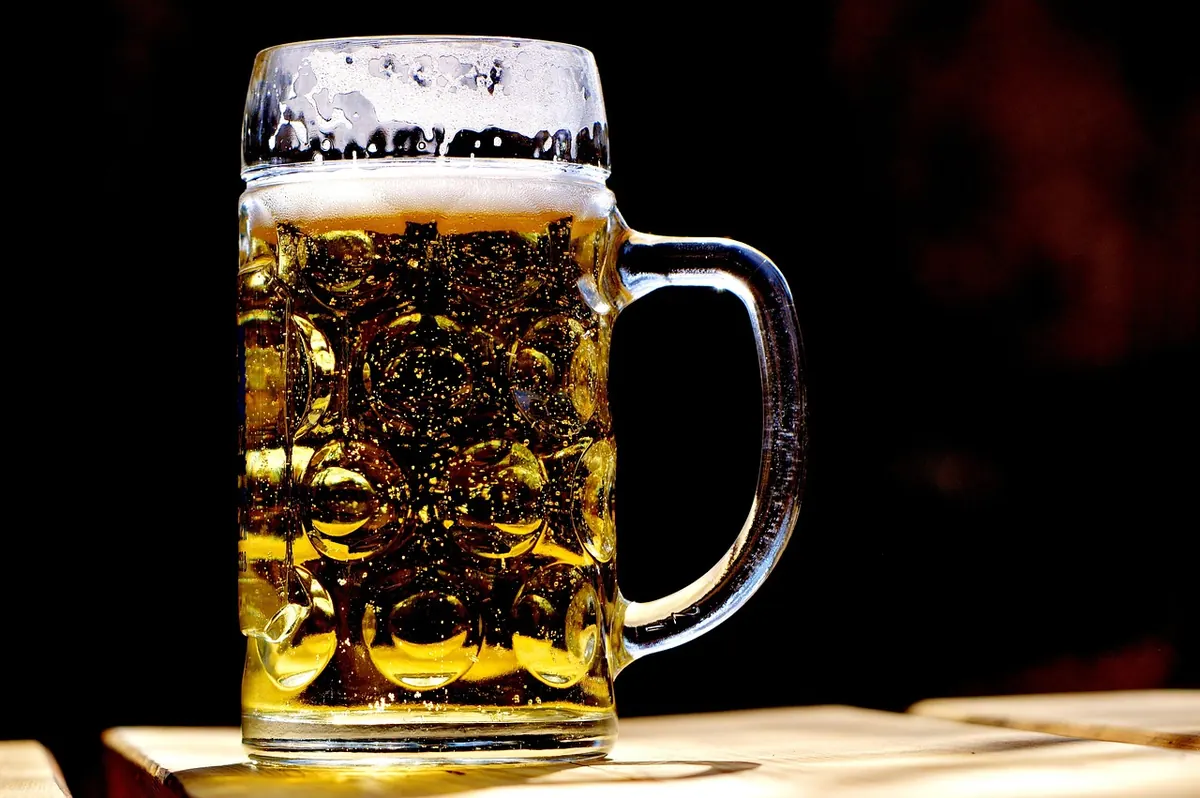
Skip the freezer, as well. A frosted glass looks inviting and pours badly: the ice crystals give dissolved CO2 thousands of places to break out of solution, and your beer foams up while tasting thinner and duller. Glass shape is worth a thought as well. A nonic or imperial pint for standard ales, a tulip or snifter for hop-forward and barrel-aged beers, a tall stange or fluted glass for lagers, and a weizen glass for wheat beers.
Balance Carbonation in the Keg
Carbonation is a balance between temperature and pressure. Cold beer holds more dissolved CO2, warm beer holds less, and your regulator setting only makes sense alongside the temperature of the keg. As a starting point, most American ales at about 38–40°F sit comfortably around 10–12 psi. British-style ales want less carbonation and a slightly lower pressure. Lagers, pilsners, and wheat beers want more.
Set and forget, or burst
The set-and-forget method means dialing in target pressure and leaving the keg alone for a week or two. It's slow and boring and it works. Burst carbonation runs 25–30 psi for a day or so, then drops to serving pressure. It's faster and easy to overshoot, and an overcarbonated keg means foam for days.
If you do overshoot, don't panic and don't shake anything. Shut off the gas, vent the keg completely, let it sit a few hours, then vent again. Repeat over a day or two. Rocking a keg dissolves gas into beer; it doesn't remove it.
Line length matters as much as pressure. A short, fat line from keg to tap gives you a fast pour and a glass of foam. A good starting point for a home kegerator is roughly five to six feet of 3/16-inch inner-diameter beer line for a keg sitting at 10–12 psi. If every pour is foamy and the beer is properly carbonated and cold, your line is probably too short.
The Pour: Tilt, Then Straighten
At the tap, most foam comes from how you open it. A partially open faucet, or a picnic tap squeezed halfway, agitates the beer on the way out. Open it all the way, every time.
- Hold the glass at about 45 degrees, an inch or two below the spout, and don't let the glass touch the tap.
- Open the faucet fully and let the beer run down the inside wall of the tilted glass.
- Fill to roughly two-thirds.
- Straighten the glass and finish pouring straight down the center. This is what builds the head.
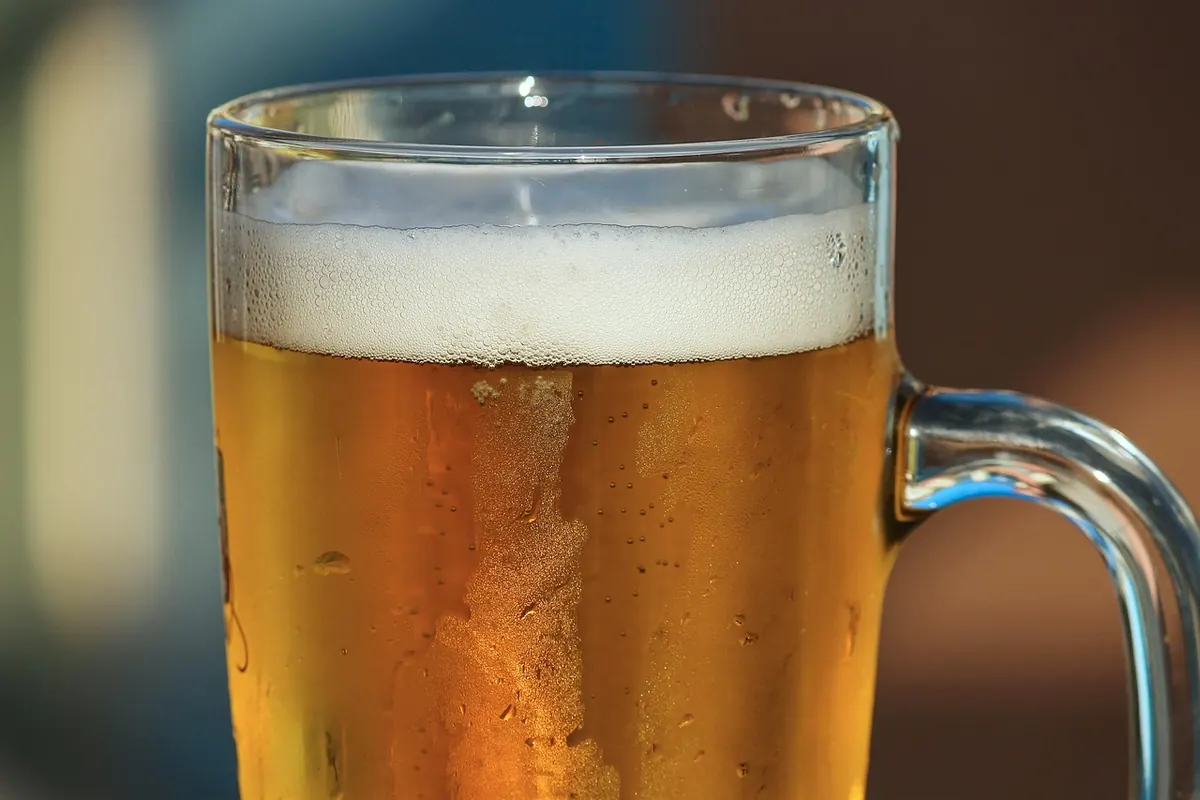
- Aim for a head of about one finger, roughly half an inch to an inch.
- Close the tap cleanly so it doesn't drip, and serve.
Pouring the entire beer down the side of the glass gives you no head at all — the beer looks flat and loses the aromatic cap that carries hop and malt character to your nose. A little foam is the point, not a mistake.
Serving Temperature Does Real Work
Cold suppresses flavor; warmth releases CO2 too quickly. Lagers and pilsners are at their best around 38–42°F, most ales around 45–50°F, and stouts, porters, and strong Belgian styles closer to 50–55°F. A kegerator set to 38°F is a sensible all-rounder, and a heavier beer can simply sit in the glass a few minutes to warm up. If your beer is pouring as half foam no matter how carefully you tilt, check the temperature before you touch the regulator.
Growlers Run on a Short Clock
A growler is a serving vessel, not a storage vessel. Filled well — purged and capped on foam — and kept cold and upright, it's at its best within a day or two, and hoppy beers fade fastest. Once it's open, finish it. These habits help:
- Keep it cold on the way home. A warm car ride flattens beer fast.
- Don't shake it. You'll knock CO2 out of solution and the first glass will be pure foam.
- Pour gently into a tilted glass, just like a keg pour, and stop before the sediment at the bottom.
- Keep swing-top gaskets clean and replace them when they harden or crack.
Quick Foam Troubleshooting
- First pour foamy, later pours fine: warm faucet, shank, or line. The first beer cools the path.
- Every pour foamy: pressure too high, line too short, or the keg is overcarbonated.
- Foamy pour but flat-tasting beer: the CO2 is escaping rather than staying dissolved — usually a temperature problem.
- Beer gushes in the glass: detergent residue, lipstick, or a frosted glass.
Make It a Habit
Clean your beer lines every couple of weeks, or at least with every new keg, and keep your serving fridge steady rather than chasing it up and down. Check temperature and pressure before you blame the beer. Chill a glass in the fridge if you like, but never freeze it, and pour the first pint of a session into the sink if it's lively — the second one will be better. Do those things consistently and the pour stops being the hard part of home kegging.
Photo: acunha1973 / Pixabay